Capsule Wardrobe 2026: Everything You Need to Know
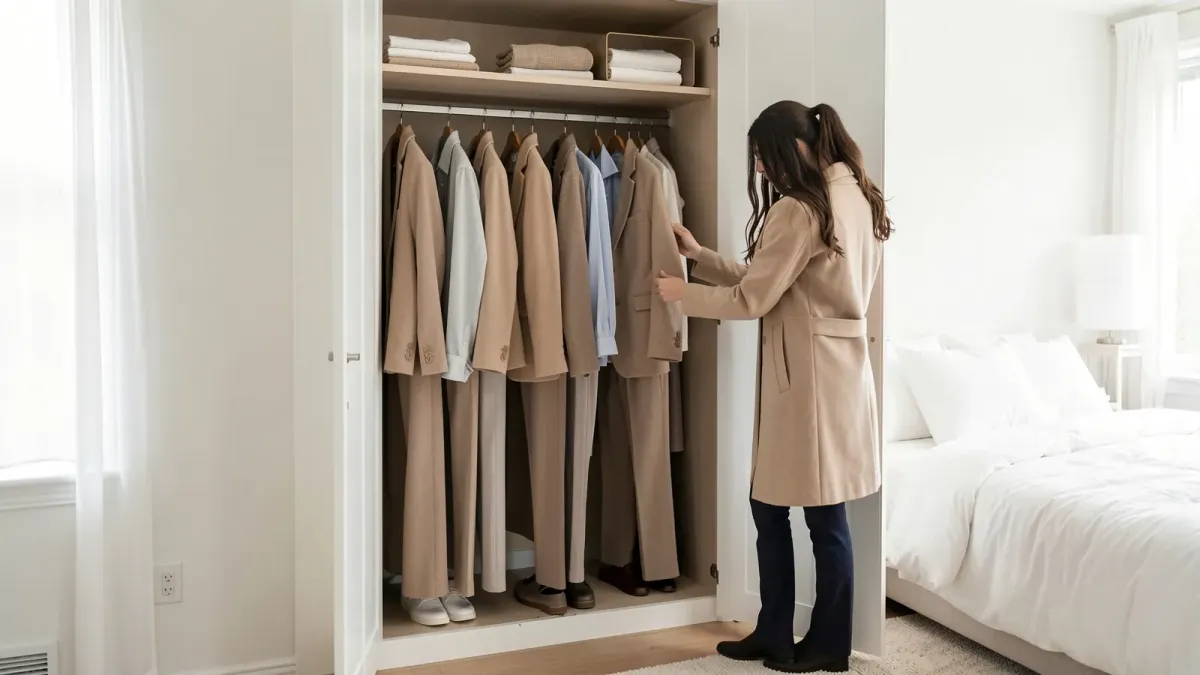
A 2026 capsule wardrobe starts with what you already wear
A capsule wardrobe in 2026 is not a personality transplant, and it is not a list of "this year's" colors invented by a stranger. It is a smaller set of clothes that you can actually combine, repair, and wear in the life you already have. I have tried the other version: a stacked cart of "basics" that did not match the shoes I owned, plus a promise that I would suddenly attend more formal dinners. Those pieces still had tags on in June.
The useful method is slower and less photogenic. You look at what you already reached for last season, you notice the gaps that caused a last-minute wash or a last-minute buy, and you fill only those gaps. Spring capsule wardrobe 2026 and summer capsule wardrobe 2026 are just seasonal edits of the same idea, not new religions. A women's capsule wardrobe in 2026 can be twenty pieces or forty. There is no official number, and anyone who gives you one without seeing your week is guessing.
This is an everything-you-need-to-know guide to the method, not a shopping list, and not a forecast of trends.
Inventory first, shopping later
Give yourself one honest hour, not a dramatic closet purge on a tired night.
- Pull the clothes you wore on repeat in the last two or three months.
- Leave hanging or folded the pieces you did not wear, and ask why: fit, weather, or boredom.
- Write down the jobs your week actually contains: work, home, walking, a particular sport, a dressier evening, or none of those.
- Name the gaps in ordinary language: "a trouser I can wear with the shoes I already have," not "a trending wardrobe staple."
- Only then write a short list of what, if anything, to add.
If a piece is unworn because it needs a tailor, that is a repair or an alteration, not automatically a replacement. If it is unworn because it itches, no capsule will make you love it.
| Weekday job | What a capsule usually needs | What I no longer automatically add |
|---|---|---|
| Work or appointments | A few tops and bottoms that already go together, and shoes you can walk in | A formal jacket "in case" you do not have that kind of week |
| Home and errands | Soft, presentable layers you will actually put on | Pretty loungewear that cannot leave the building if you need a shop |
| Walking or travel | A layer, comfortable shoes, a bag that closes | A special "travel outfit" that only works in an airport photograph |
| Warm weather | Breathable pieces that cover as much as you want in the sun | A set of matching linens you have not sat in |
| Cool weather | A real coat, and sweaters that fit under it | A decorative scarf collection that does not replace a coat |
| One dressier event | One outfit you already feel like yourself in | A second dress "so I have options" if the first already works |
A capsule is allowed to include color, pattern, and one odd piece you love. Uniform does not have to mean beige. It means the odd piece still has something to go with.
A checklist for building a 2026 capsule
- You have looked at what you already wear, not only at a list on a phone
- The jobs of your actual week are written down
- Shoes, coats, and bags are in the plan, because outfits fail there first
- Each possible new piece can form at least two outfits with what you already own
- You have a realistic seasonal edit, not a once-a-year complete replacement
- Repair and tailoring have been considered before replacement
- You have a budget ceiling and a place the new pieces will live
- You will wear a new item around a normal day before buying a matching second
- Anything bought "for a future life" has to survive this one first
If the list of additions is longer than a small handful, you are not building a capsule. You are restocking a closet. Slow down.
Seasonal edits, not a new identity each spring
A spring edit might mean moving the heaviest knits out of the daily reach and checking whether last year's lighter trousers still fit and still go with the shoes you have. A summer edit might mean sun-sensible coverage and fabrics you can sweat in, plus a layer for indoor air conditioning. The year on the calendar does not require a new palette. It requires clothes that still fit your life in 2026.
If your work changed, or a baby arrived, or you moved to a wetter city, the capsule should change with the life, not with a trend report. That is the whole point of a small wardrobe: it is easier to adjust.
I now keep a note on my phone titled "holes," and I only shop from that note. It is an unromantic system, and it has saved me from a fourth white shirt I did not need. The one time I ignored it, I came home with a skirt that went with nothing I already walk in. It was not a capsule piece. It was a mood.
What a capsule is not, in case the word has been oversold
It is not a promise that you will never shop again. It is not a requirement to own only neutral colors. It is not a reason to throw away clothes that still work because they were not in a photograph of a "2026 capsule." And it is not a competition with someone whose job, climate, and laundry situation are different from yours.
If a smaller wardrobe would make your mornings quieter, the method is worth a try. If the word "capsule" makes you feel watched, ignore the word and keep the habit: wear what you have, fill real holes, and stop when the week is covered. That habit is the entire idea, with or without the fashionable name.
Questions about a capsule wardrobe in 2026
How many pieces should a women's capsule wardrobe in 2026 include?
There is no official number. Count only the clothes you will actually rotate, including shoes and a coat, and stop when your week is covered. A borrowed number from a stranger's list will not know your commute.
Should I build a separate spring and summer capsule?
You can edit by season, and you can keep a small core that stays all year. Separate capsules are useful if storage is tight. They are not required. Do not buy a second complete wardrobe if a few swaps would do.
Can a capsule include trend pieces?
Yes, if they go with what you already wear and you have a place to use them. A trend piece with no partners is just a new orphan in the closet.
What if my body or my job changes this year?
Change the capsule. The method still works: look at what you reach for, fill the new gaps, and do not keep a monument to last year's week. Alterations, if they can make a loved piece usable again, are often a better first step than a whole new set.